Second Extender Integration Week at LIRIS (Paris)

Second Extender Integration Week at LIRIS (Paris)

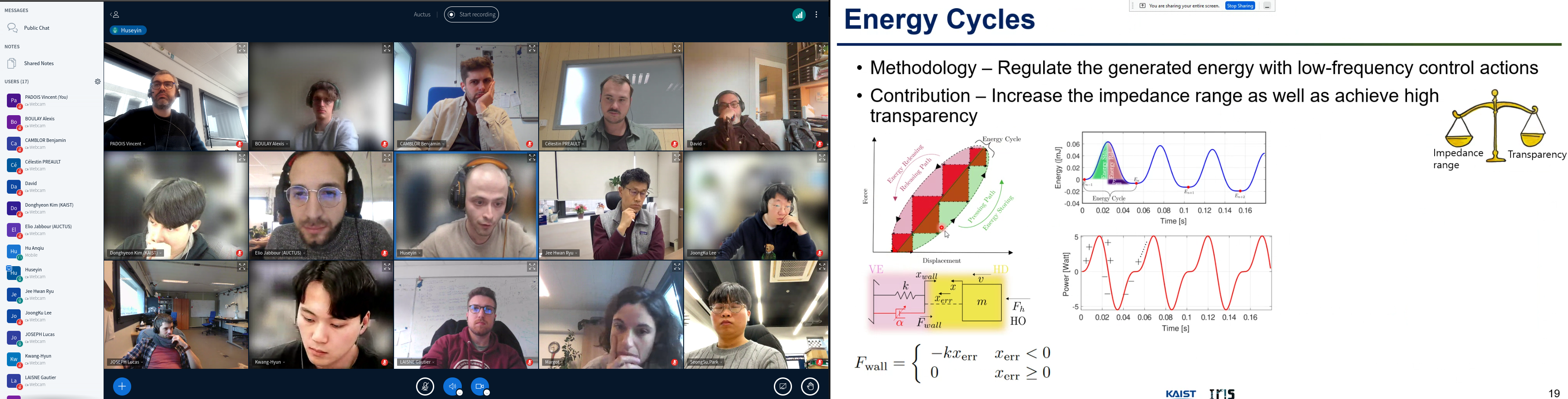
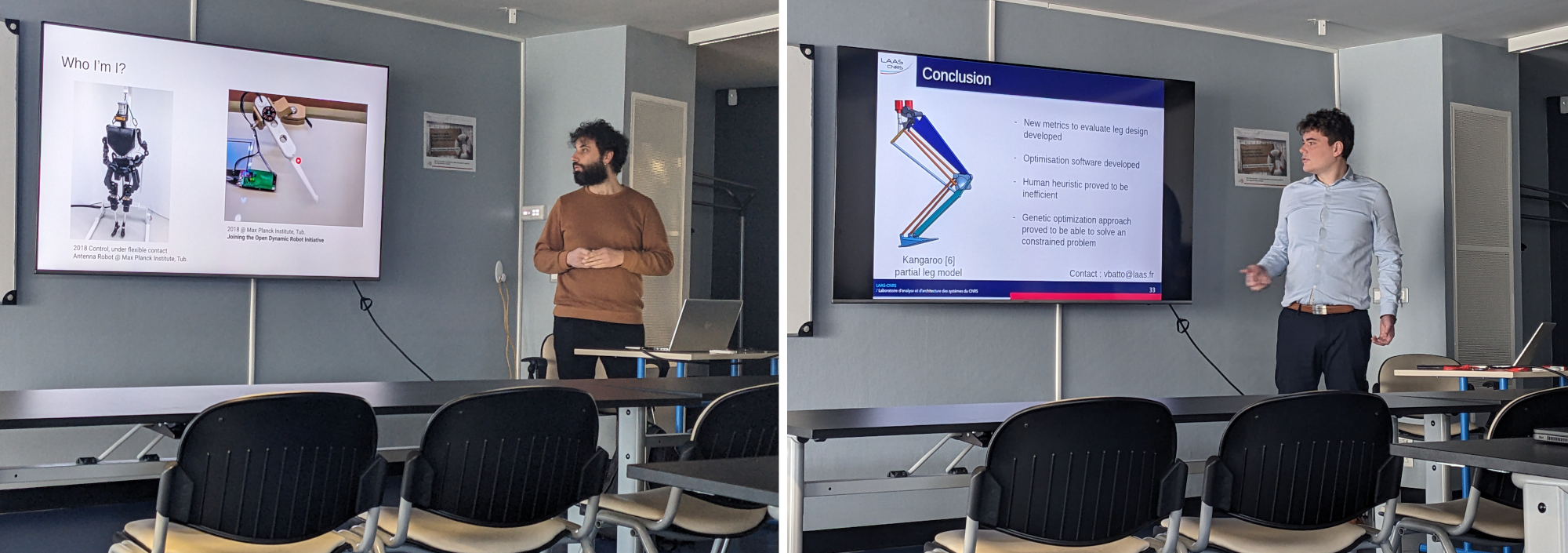
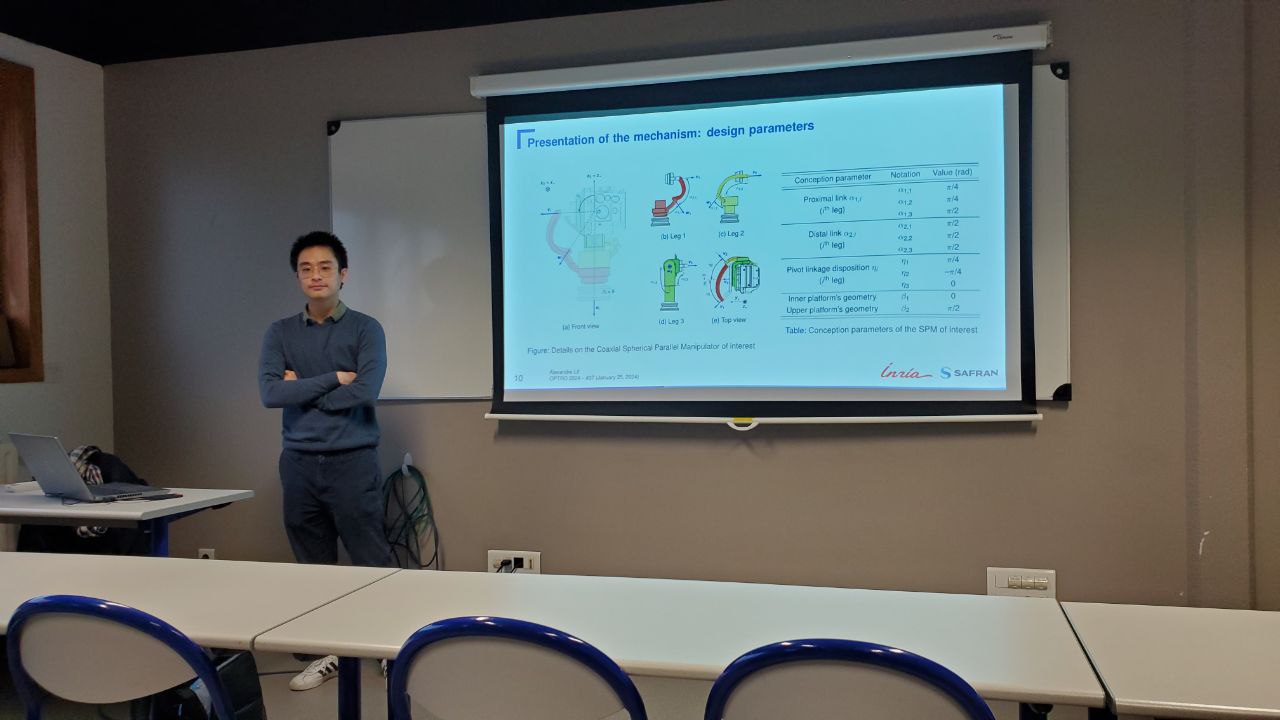
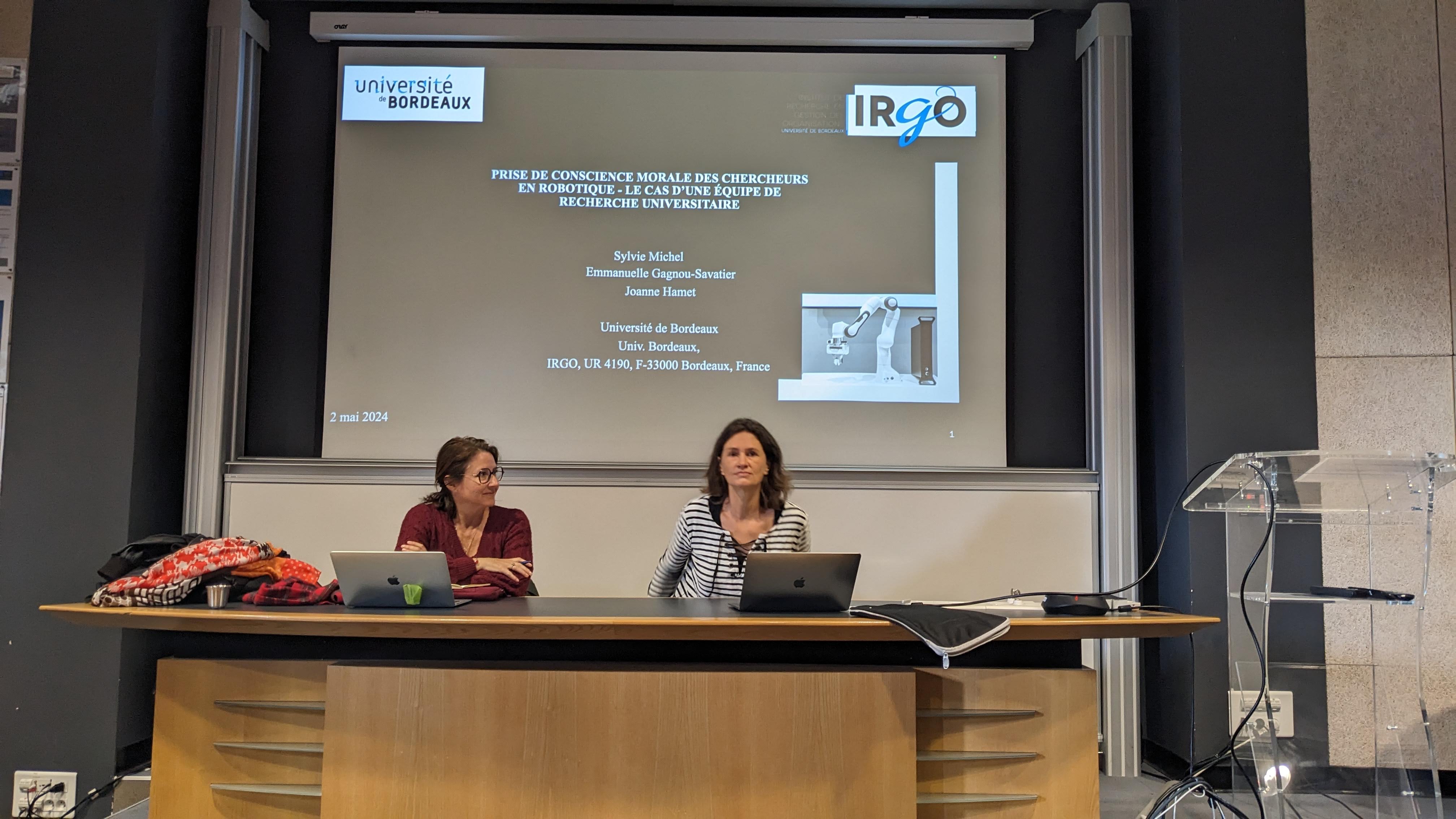
As a follow-up to the Extender project, the participants met again to discuss their respective progress.

Objective

This second meeting had two main objectives. The first was to gather feedback on the initial alpha tests conducted at clinics in Nantes and Clermont-Ferrand. The second was for the research laboratories to present their new technological building blocks and their progress on the project.

For the Auctus team, which expanded in May with the arrival of Julien Bernard and Nicolas Delbrel, three key building blocks were highlighted.

[Read More]

The PhD work of Alexis was presented at Eurohaptics 2026. It contributes to haptic guidance in teleoperation with guidelines to properly define and select a haptic guidance model and to evaluate the human-guidance interaction.

Abstract

Haptic guidance in teleoperation enhances operator performance through force feedback. This paper presents guidelines to select the most appropriate model considering the task, the environment and the operator. We define a unified \added{formulation} expressing most common models (spring-damper, potential field, and guiding tube) as variations of a stiffness-damping system with model-specific guiding functions. We conducted a user study comparing the three classical models across six scenarios with varying environmental conditions in a vertical farming task. Results show no universally superior model: spring-damper excels in cluttered environments, potential field in free spaces (but it shows risks near obstacles), and guiding tube offers a balanced compromise. We propose novel objective metrics to evaluate the interaction, and show that guiding force magnitude correlates with comfort and trust scores. These findings provide practical model selection guidelines through environmental characteristics and real-time evaluation metrics.

[Read More]

During the “Assistive and Rehabilitation Robotics” conference of the GDR Robotique, Esteban COSSERAT presented his work on how to ensure the safety of teleoperation of a robotic arm mounted on the wheelchair of a person with a disability. Such an application raises numerous challenges, such as minimizing risks to the user, the robot, and the surrounding environement, particularly because the user who controls the robotic arm is located within its workspace.

[Read More]

The PhD work of Elio was presented at ICRA 2026. It contributes to blending in shared control with a Model Predictive Control approach that enforces safety and improves the assistance quality.

Abstract

Shared control methods distribute control between human operators and robots in demanding tasks, enabling collaboration that leverages their respective strengths and expertise. Sharing the task typically involves blending algorithms that combine human control inputs to (pre)planed assistance trajectories. Conventional blending techniques, such as Linear Blending, compute a combined output but neither guarantee feasibility of this shared motion, nor ensure compliance with safety or task-related constraints. This paper proposes to tackle feasibility and safety by formulating the blending strategy as the solution of a constrained optimal control problem, that enforces environment limits, task requirements, and physical capabilities. A Model Predictive Control approach is used to solve the optimization problem and anticipate constraints by predicting the robot motion over a receding time horizon. We evaluate this approach in simulated and real-world pick-and-place teleoperation experiments. The experimental study compares the Model Predictive Control approach to Linear Blending and full Teleoperation. The results show that the new framework offers significant improvements, as it provides a safer, more accurate, and repeatable response.

[Read More]

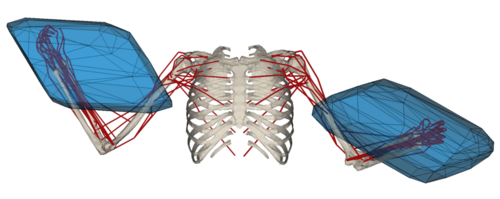
Congratulations to Pierre for this contribution advancing fast and clinically applicable upper-limb musculoskeletal modeling.

Abstract

This paper addresses the challenge of estimating personalized muscle forces through musculoskeletal modeling, which is valuable for assessing patient status and monitoring clinical progress. Upper-limb applications have been limited due to system complexity and the long computation times of existing calibration methods. We propose a fast (<5 min) calibration method for upper-limb models, calibrating maximal isometric force and optimal muscle length for 38 muscles across 10 degrees of freedom by matching muscle-generated moments with dynamically consistent joint moments. The method leverages experimental data including bony landmark trajectories from markerless motion capture, external forces, and electromyography (EMG). During hand-cycling, the calibrated model reduced EMG tracking error compared to the uncalibrated model (5.58±0.92% vs. 6.30±1.28%), and reliance on non-physiological residual moments was also lowered (12.68 vs. 23.61% of peak moment). This approach provides a fast and reliable framework for upper-limb musculoskeletal calibration, facilitating more accurate and clinically applicable muscle force estimation.

[Read More]

This work contributes a practical and open tool for harmonising scapular kinematic data across studies, addressing a long-standing interoperability challenge in shoulder biomechanics.

Abstract

Defining bone-embedded local coordinate systems (LCSs) is fundamental in shoulder biomechanics, yet multiple scapular LCSs exist, hindering data comparison. Although the International Society of Biomechanics (ISB) has published recommendations, alternative definitions based on distinct anatomical landmarks remain widely used. To address these inconsistencies, we extend a previously proposed average rotation matrix approach to 11 scapular LCSs reported in the literature, including both scapula- and glenoid-based systems. Using statistical shape models derived from 80 participants (asymptomatic and pathological shoulders), 1000 scapulae were generated to quantify geometric transformations between LCSs. The application of the average rotation matrices substantially reduced the maximal discrepancies between LCSs, from 21.9° to 5.2°. Scapula-based systems exhibited lower discrepancies than glenoid-based ones, reflecting greater morphological variability in the glenoid region. These findings confirm that average rotation matrices provide a reliable means of harmonising scapular kinematic data across studies, promoting interoperability in shoulder biomechanics research.

[Read More]

This paper is one of the many positive outcomes of our collaboration with the Aerospline company through the Plan de relance program. Congratulations to Guillaume for his dedication on this work.

Abstract

This paper addresses the challenging problem of Semi-Constrained End-Effector Path Planning for robotic manipulators. This problem arises when complex specifications restrict the end-effector’s motion during the execution of industrial tasks. Traditional path planning algorithms often struggle with such problems due to the difficulty of exploring the robot’s valid configuration space, or constrained manifold, under these conditions. In this work, we propose a novel sampling-based approach that efficiently navigates the constrained manifold by exploring an alternative space representing the end-effector’s degrees of freedom, such as process-related tolerances, throughout the task. This method retains the simplicity of sampling-based techniques. Building on this approach, we introduce the F-RRT algorithm, an adaptation of the renowned RRT planner [1]. F-RRT demonstrates enhanced speed and robustness compared to existing solutions, particularly in complex and cluttered environments.

[Read More]
Extender Integration Week at LIRIS (Paris)

Extender Integration Week at LIRIS (Paris)

As part of the Extender project, all project participants met in Paris during the week of January 19, 2026, at the ISIR offices.

Objective

The main goal of this meeting was to validate an initial version of the product developed for upcoming testing.

This validation is an important milestone in the project, as it represents the first meeting between robotics engineers, who are working on the product’s capabilities, and clinicians, who will be working with this initial version for clinical testing on users.

[Read More]

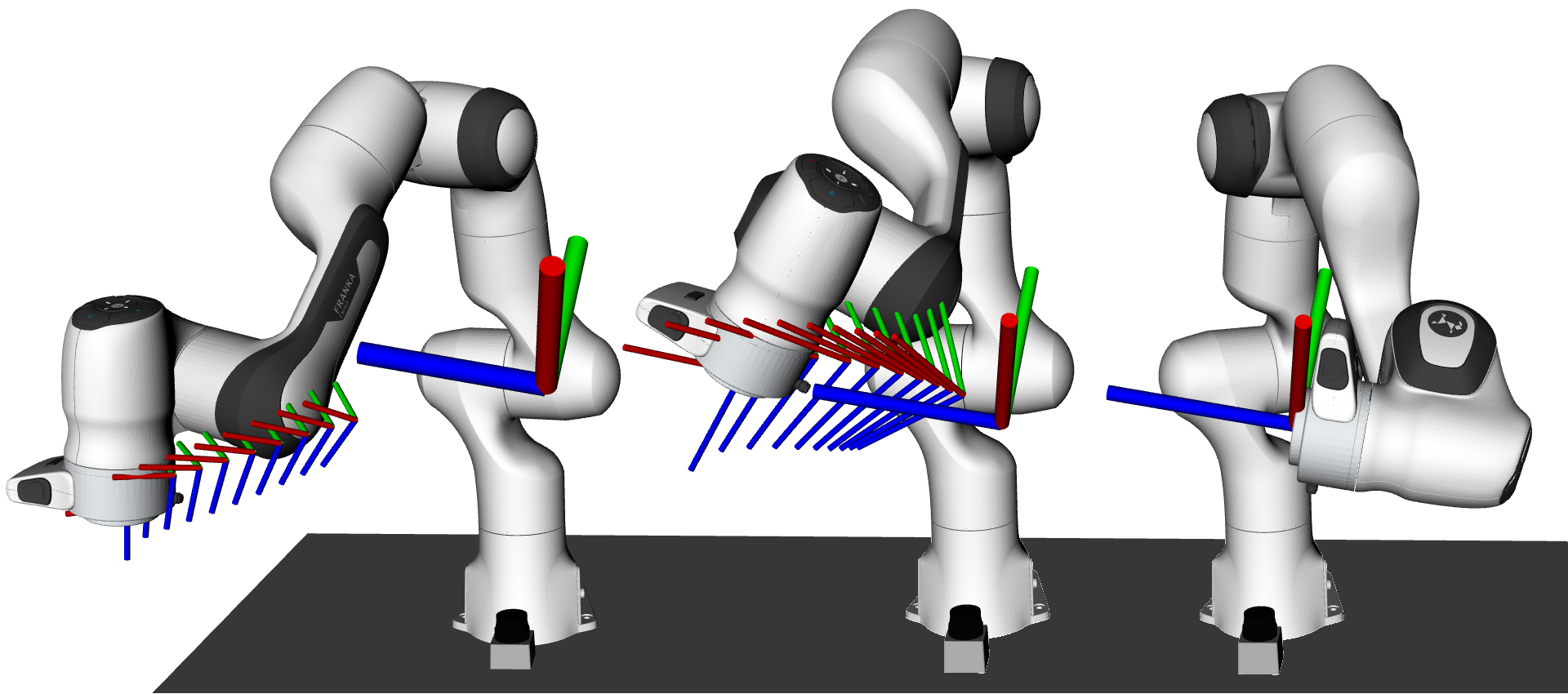
Our paper based on the PhD work of Antun Skuric and Pycapacity on generating online optimal robot motions that best exploit the robot capabilities has been accepted for publication in the IEEE Transactions on Robotics.

Abstract

Conforming to safety standards often limits collaborative robots’ performance and size, restricting their applications despite their capabilities. Planning their motions in human environments involves a trade-off between optimal trajectory planning and quick adaptation to dynamic, unstructured spaces. Traditional trajectory planning methods either use simplified robot models and sacrifice robot’s abilities for computational efficiency, or exploit robots’ abilities fully but have high computational complexity and rely on substantial pre-computation. This paper introduces an approach for trajectory planning that exploits robot’s full motion abilities while planning on-the-fly. In each step of the trajectory execution, it evaluates robot’s movement ability using polytope algebra and calculates a time-optimal Trapezoidal Acceleration Profile (TAP) on the remaining trajectory. The method is shown to be near time-optimal (around 5% slower trajectories) by benchmarking it against the state-of-the-art time-optimal method TOPP-RA. The method allows reaching higher velocities (able to plan up to 100% of the robot’s kinematic limits) while at the same time lowering the tracking error (under 4mm) than traditional Cartesian Space planning methods. A mock-up experiment demonstrates its efficiency in collaborative waste sorting using a Franka Emika Panda robot.

[Read More]

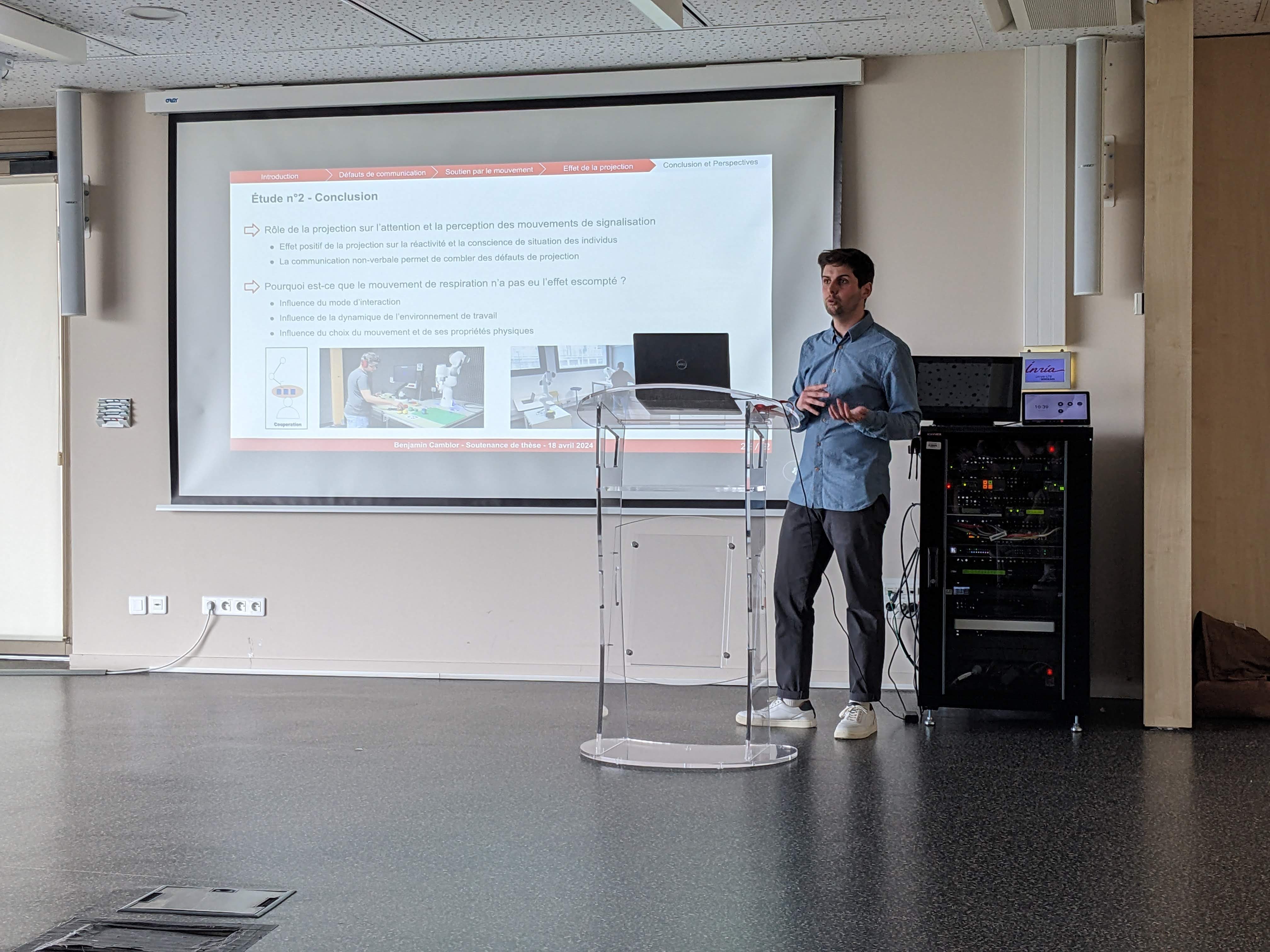
We were pleased to see Elio Jabbour defend his PhD thesis on “Shared-autonomy control for improving Human-Robot collaboration in haptic teleoperation”.

Abstract

Shared control frameworks assist human operators by blending their commands with autonomous, goal-oriented trajectories. However, conventional blending techniques often fail to guarantee the feasibility of the resulting motion or the optimality of the combined decision. This thesis addresses two principal gaps in shared control: 1) the lack of a blending arbitrator that unifies predictive foresight with verifiable safety in a computationally tractable manner, and 2) the flawed assumption that the autonomous assistance is correct, which leads to performance degradation and user-robot conflict when the system’s world model is misaligned with reality.

[Read More]